
Bali is far more than just a tropical paradise of sandy beaches and luxury resorts. It is a living, breathing spiritual landscape where the divine is woven into the fabric of daily life. For visitors in 2026, understanding the island’s unique identity requires a deep dive into Balinese Hinduism, a syncretic faith that blends ancient traditions, animism, and Hindu philosophy. This guide aims to provide bali religion culture and traditions explained for a deeper understanding.
In this guide, we explore the heartbeat of the “Island of the Gods,” detailing the rituals, social structures, and etiquette that make Bali a globally unique cultural beacon. This exploration will provide bali religion culture and traditions explained in an accessible manner.
The Essence of Balinese Hinduism (Agama Hindu Dharma)
Unlike the Hinduism practiced in India, Balinese Hinduism is a distinct branch known as Agama Hindu Dharma. It is deeply influenced by indigenous animist beliefs, ancestor worship, and the local reverence for the island’s volcanic landscape. To truly grasp bali religion culture and traditions explained, one must understand these unique aspects of Agama Hindu Dharma.
The core philosophy revolves around Tri Hita Karana, a concept that translates to “three causes of well-being.” This principle dictates that harmony must be maintained in three relationships: This philosophy is central to bali religion culture and traditions explained.
Parhyangan: Harmony between humans and God.
Pawongan: Harmony between humans and other humans.
Palemahan: Harmony between humans and the natural environment.
Daily Devotion: The Canang Sari Offering
If you walk through the streets of Ubud or Seminyak in 2026, you will inevitably step over small, palm-leaf baskets filled with flowers, incense, and rice. These are Canang Sari, the most iconic symbol of Balinese daily life. Understanding daily practices like the Canang Sari is key to having bali religion culture and traditions explained.
These offerings are not merely decorative. They are an expression of gratitude to the Sang Hyang Widhi Wasa (the Supreme God) and serve to pacify the spirits. By placing these offerings, the Balinese seek to maintain a cosmic balance between the forces of good (Dharma) and evil (Adharma). Such daily rituals are fundamental to bali religion culture and traditions explained.
Major Ceremonies and Festivals
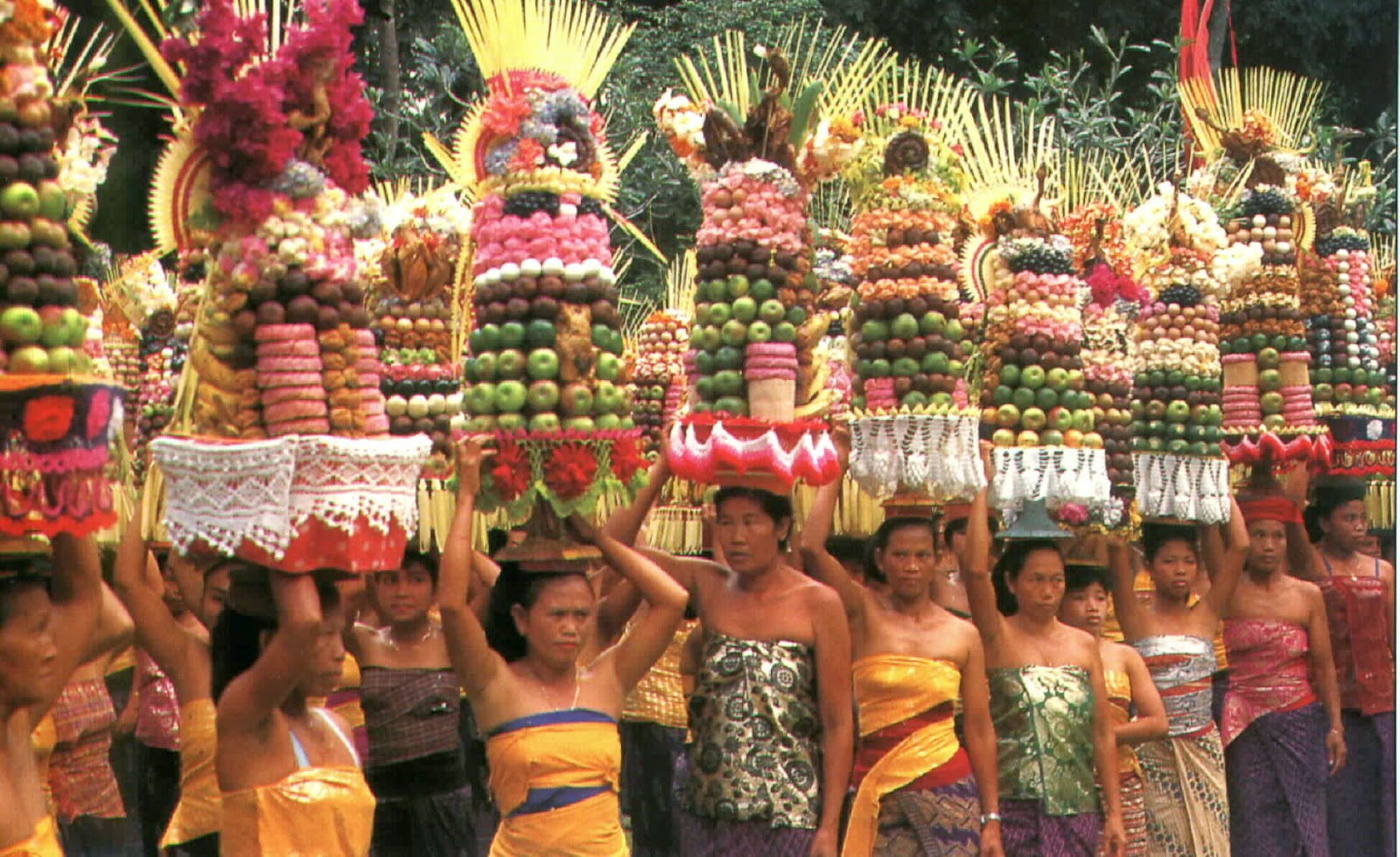
Balinese tradition is marked by a calendar unlike any other. The Pawukon (a 210-day cycle) and the Saka (lunar) calendars dictate the timing of the island’s most significant spiritual events. The vibrant calendar of ceremonies and festivals further illustrates bali religion culture and traditions explained.
Nyepi: The Day of Silence
Nyepi remains the most fascinating event for travelers. On this day, the entire island shuts down. No flights land, no shops open, and locals remain indoors to meditate. The goal is to trick the spirits into believing the island is uninhabited, ensuring a year of peace and spiritual renewal. Nyepi is a profound example of bali religion culture and traditions explained through practice.
Galungan and Kuningan
Galungan celebrates the victory of Dharma over Adharma. During this period, the island is adorned with Penjor—tall, beautifully decorated bamboo poles that line the streets, symbolizing gratitude for the abundance of the earth. These festivals are integral to bali religion culture and traditions explained.
<img alt="Bali Religion and Culture: Bali Religion and Culture" src="https://lh3.googleusercontent.com/-0PW5PQR5vHs/VSM6XOI44MI/AAAAAAAAABU/knlH_qSPG9I/s1600/balinese_wedding3.jpg” style=”max-width:100%; height:auto; border-radius:8px; margin: 1rem 0;” />
Temple Etiquette: Respecting the Sacred
With over 20,000 temples (Pura) across the island, Bali is truly the “Island of a Thousand Temples.” Whether you are visiting the iconic Pura Besakih or the cliffside Uluwatu Temple, adhering to local etiquette is essential for sustainable tourism: For visitors, understanding temple etiquette is crucial for appreciating bali religion culture and traditions explained.
- Wear a Sarong: Both men and women must cover their legs below the knees. Most temples provide rentals, but carrying your own is a sign of respect.
- Respect the Prayer: Never step in front of someone praying, and never use a camera flash directly in the faces of worshippers.
- Forbidden Entry: Women during their menstrual cycle are traditionally prohibited from entering temple grounds, as it is considered a time of ritual impurity.
- Height Matters: In Balinese culture, the head is the most sacred part of the body. Never touch someone’s head, and try not to stand higher than a priest or someone in a state of prayer.
<img alt="Bali Religion: Get to Know Balinese Hinduism & Cultural Traditions” src=”https://tobalinesia.com/wp-content/uploads/2026/05/bali-religion-n-culture-1024×683-1.webp” style=”max-width:100%;height:auto;border-radius:8px;margin: 1rem 0″ />
Community Life and the Banjar System
Behind every ceremony and village project is the Banjar, the local community organization. In 2026, the Banjar remains the backbone of Balinese society. It is a hyper-local neighborhood council that governs everything from marriage and funeral rites to local security and temple maintenance. The Banjar system offers a fascinating insight into bali religion culture and traditions explained through community structure.
This communal spirit ensures that Balinese culture remains resilient despite the rapid modernization and globalization the island has faced. Every individual has a role to play, reinforcing a social cohesion that is rarely seen elsewhere in the modern world.
Conclusion: Why Balinese Culture Matters in 2026
As we navigate the complexities of 2026, the Balinese commitment to harmony and spirituality offers a profound lesson. By prioritizing the relationship between the divine, humanity, and nature, the Balinese have successfully preserved their identity while welcoming the world. This commitment is at the heart of bali religion culture and traditions explained.
Whether you are participating in a local Odalan* (temple anniversary) or simply observing the grace of a traditional Legong dance, you are witnessing one of the world’s most vibrant living cultures. Respect, curiosity, and an open heart are the best tools for any traveler looking to truly understand the spiritual depth of Bali.