
Planning a trip to the breathtaking archipelago of Indonesia in 2026? Whether you are surfing in Bali, exploring the cultural heartbeat of Jakarta, or trekking through the jungles of Papua, understanding how the country tracks time is crucial. Because Indonesia stretches across a vast geographical expanse—spanning over 5,000 kilometers—it is divided into three distinct time zones, each with its own UTC offset.
Confusing your flight departure time or missing a boat connection due to a time zone shift is a common rookie mistake. This guide provides a comprehensive breakdown of the Indonesian official time zones, ensuring your 2026 itinerary goes off without a hitch and you manage any potential jet lag effectively.
The Three Time Zones of Indonesia: WIB, WITA, and WIT
Indonesia does not observe Daylight Savings Time (DST), meaning the clocks stay consistent throughout the entire year, operating on standard time. This stability is helpful for travelers, as you don’t have to worry about shifting schedules depending on the season. The country is split into three zones, each separated by exactly one hour.
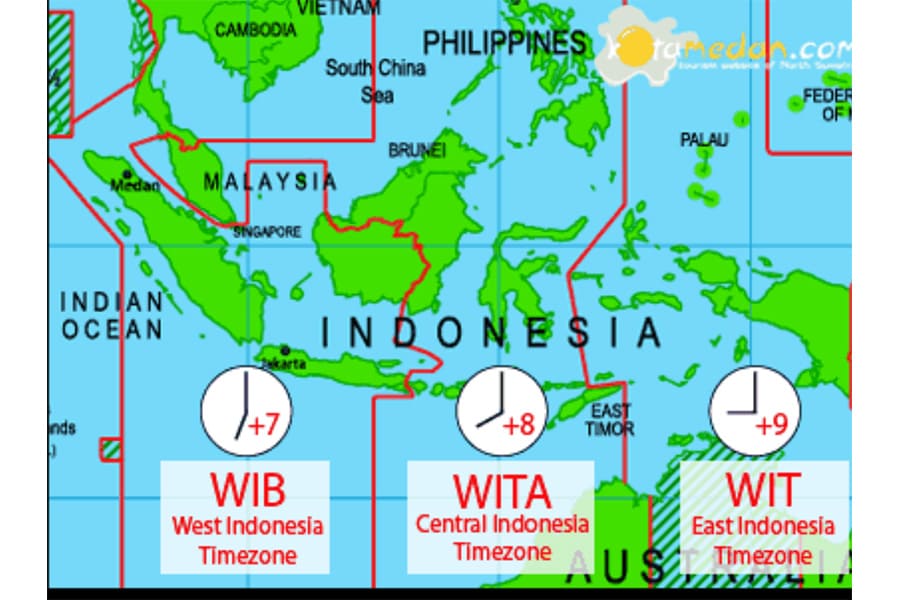
1. Western Indonesian Time (WIB)
Time Offset: UTC+7 (equivalent to GMT+7)
Regions Covered: Sumatra, Java, West Kalimantan, and Central Kalimantan.
Key Destinations: Jakarta, Yogyakarta, Bandung, Surabaya, and Medan.
WIB is the time zone used by the majority of the population. Since it covers the capital city of Jakarta and the high-traffic island of Java, most international flights arriving in Indonesia land within this zone. If you are starting your trip in a major hub, you will likely be operating on WIB, often referred to as Jakarta time by travelers.
2. Central Indonesian Time (WITA)
Time Offset: UTC+8 (equivalent to GMT+8)
Regions Covered: Bali, Nusa Tenggara (Lombok, Sumbawa, Flores), Sulawesi, and parts of Kalimantan.
Key Destinations: Bali, Labuan Bajo, Makassar, and Lombok.
WITA is the most popular time zone for vacationers. Because Bali is the undisputed tourism capital of the country, millions of travelers adjust their internal clocks to this zone every year, often thinking of it as Bali time. Remember that moving from Jakarta (WIB) to Bali (WITA) requires you to move your watch forward by one hour, accounting for the time difference.
3. Eastern Indonesian Time (WIT)
Time Offset: UTC+9 (equivalent to GMT+9)
Regions Covered: Maluku Islands and Papua.
- Key Destinations: Raja Ampat, Jayapura, and Ambon.
WIT is the least populated zone but home to some of the most spectacular natural wonders on the planet. If you are heading to the pristine diving waters of Raja Ampat, you will be two hours ahead of those in Jakarta, experiencing a significant time difference from the western parts of the archipelago.
Why Time Zone Awareness Matters for Your 2026 Trip
For the modern traveler, your smartphone usually updates the local time automatically when you connect to a local network. However, relying solely on technology can lead to complications during island-hopping adventures.
Avoiding Missed Connections
When booking domestic flights or ferries, pay close attention to the departure and arrival times listed on your ticket. Many travelers flying from Jakarta to Bali—or from Bali to Labuan Bajo—often overlook the +1 hour jump. If your ferry in Labuan Bajo departs at 8:00 AM WITA, but you are still operating on WIB time, you might arrive at the dock an hour late.
Coordinating with Home
If you are working remotely or need to sync with family back home, keeping track of three zones can be tricky. This is especially relevant for digital nomads and remote workers. Use the “World Clock” feature on your smartphone to pin Jakarta, Bali, and your hometown. This simple step prevents you from accidentally calling colleagues or loved ones in the middle of the night.
The “Island Time” Concept
Beyond the official zones, travelers often encounter the local phenomenon of “Jam Karet” or “rubber time.” This is a cultural concept where time is viewed as flexible rather than rigid. While airlines and major transport operators in 2026 maintain strict schedules, local social events or informal transport might not adhere to the clock as strictly as you are used to. Always allow for a buffer in your schedule.
Practical Tips for Managing Time Across the Archipelago
- Check your ticket: Always verify the local time zone indicated on your e-ticket. Airlines will always list the time in the local time of the departure or arrival airport.
- Use a reliable app: Apps like “Time Buddy” or your phone’s built-in clock widget are excellent for visualizing the gap between WIB, WITA, and WIT.
- Manual synchronization: When arriving at a new destination, toggle your phone to “Set Time Automatically” in your settings. This forces the device to pull the correct current local time from the nearest cell tower.
- Buffer your transfers: If you have a tight connection between a flight and a boat, aim for at least a 3-4 hour window. This accounts for potential delays and the confusion of switching time zones.
Conclusion: Navigate Indonesia with Confidence
Understanding the Indonesian official time zones is more than just a logistical necessity; it is part of the rhythm of travel in this massive, diverse nation. From the frantic pace of Jakarta in the WIB zone (or Jakarta time) to the relaxed beaches of Bali in the WITA zone (often called Bali time) and the untouched wilderness of Papua in the WIT zone, knowing where you are on the clock helps you make the most of every second.
As you plan your 2026 Indonesian getaway, keep these boundaries in mind. By staying informed, you can avoid the common pitfalls of island hopping and ensure your focus remains where it should be: on the incredible food, culture, and landscapes that make Indonesia one of the top travel destinations in the world.