
In the rapidly modernizing landscape of 2026, the traditional Balinese house compound—known locally as the Pekarangan—remains a profound testament to a culture that refuses to trade its soul for convenience. Unlike Western architectural styles that prioritize single-structure efficiency, the Balinese home is a living organism. It is a microcosm of the universe, carefully designed to align the human spirit with the divine, the natural world, and the community.
Understanding the layout of a Balinese compound is like decoding a map of the Balinese worldview. Every wall, pavilion, and gate is positioned according to the Asta Kosala Kosali, an ancient architectural manual that dictates the sacred geometry of space.
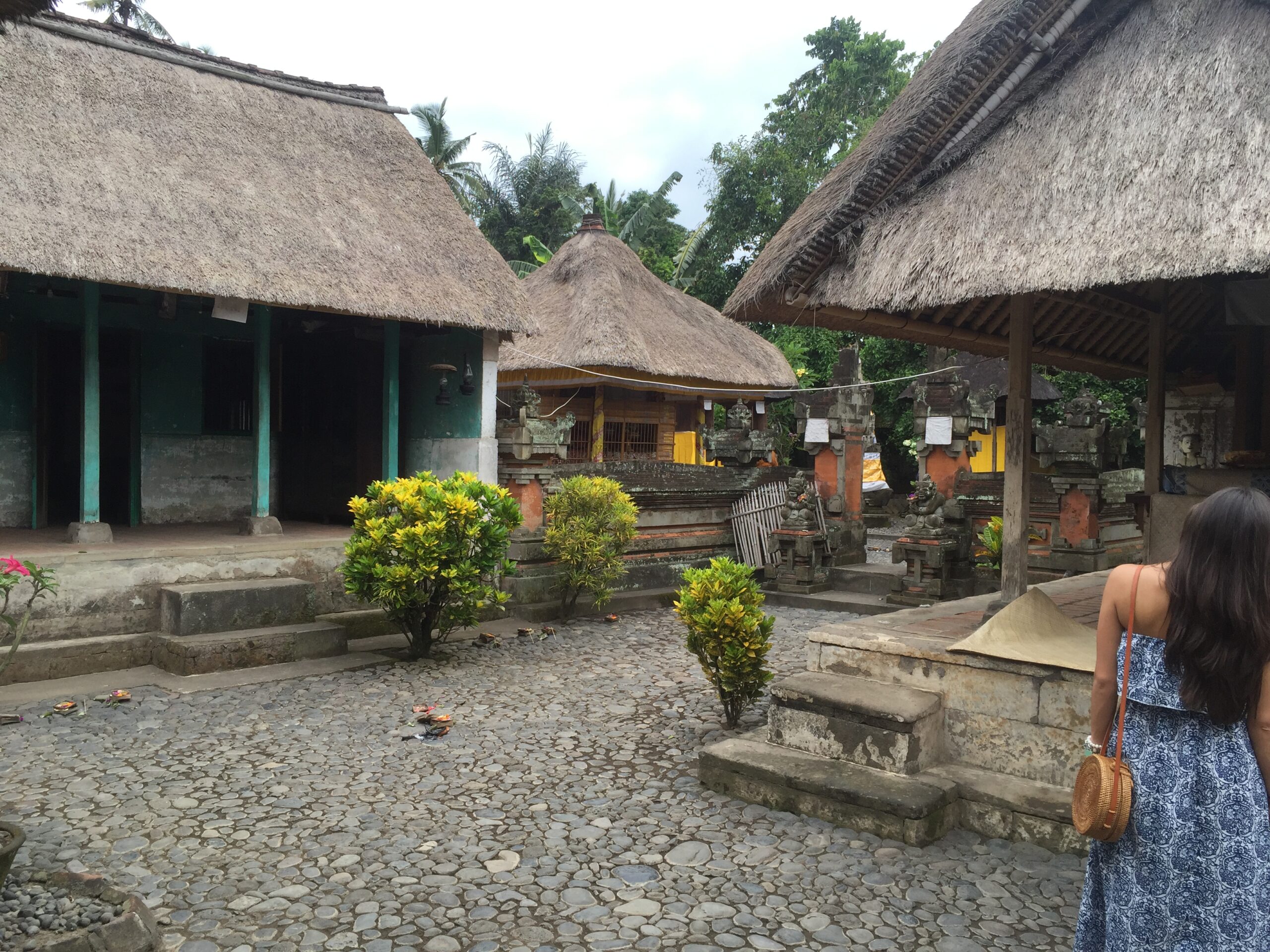
The Philosophy of Space: Asta Kosala Kosali
At the heart of the Balinese home lies the concept of Tri Hita Karana, which emphasizes harmony between people, nature, and the divine. This philosophy is not just a theory; it is physically manifested in the orientation of the compound.
The layout is strictly dictated by the Kaja-Kelod axis. Kaja refers to the direction of the sacred mountain, Mount Agung, while Kelod points toward the sea. In Balinese culture, the mountain represents the realm of the gods, and the sea represents the underworld. Therefore, the most sacred pavilions are always placed toward Kaja, ensuring that the family’s daily life is physically and spiritually aligned with the divine.
Defining the Compound: Walls, Gates, and Privacy
A traditional Balinese compound is an enclosed sanctuary. The surrounding wall, or Penyengker, serves a dual purpose: it acts as a physical barrier against negative energy and provides the essential privacy required for family life.
The entrance, known as the Angkul-Angkul, is a masterpiece of craftsmanship. It is rarely a simple door; it is a roofed gateway that filters those entering the home. Behind the entrance, a wall called the Aling-Aling is placed strategically to block the direct line of sight from the street. According to local belief, spirits—which move only in straight lines—are blocked by this wall, preventing them from entering the inner courtyard.

The Bale: Pavilions for Every Purpose
A Balinese compound is not one large house, but a collection of separate pavilions (Bale), each serving a distinct function. This modular layout promotes airflow and communal interaction. Key structures include:
Sanggah/Pemerajan: The family temple, located in the Kaja-Kangin* (northeast) corner, the most sacred spot in the compound.
- Bale Dauh: Typically used as a living area or a space for guests.
- Bale Meten: The most private pavilion, usually reserved for the head of the family or for storing heirlooms. It is often the most enclosed structure.
Paon: The kitchen. In traditional layouts, this is often placed toward the Kelod* (sea) direction, reflecting its status as a functional, grounded space.
Harmony in Daily Life: Why the Layout Matters in 2026
In 2026, as Bali continues to see an influx of global travelers and digital nomads, there is a renewed interest in the sustainability and bioclimatic design of these compounds. The use of natural materials like bamboo, thatch, and brick, combined with the open-air design of the Bale, creates a home that breathes.
The layout encourages a lifestyle that is deeply connected to nature. Because the family lives across multiple pavilions, they spend a significant amount of time in the central courtyard, or Natah. This open space is the heartbeat of the home, where children play, offerings are prepared, and family bonds are strengthened.

Preserving the Sacred Geometry
Despite the pressures of modern construction, the Balinese house compound philosophy remains remarkably resilient. Many new homes being built in 2026 continue to incorporate traditional elements, such as the Aling-Aling and the Sanggah, even if the living areas are modernized with contemporary comforts.
This architectural resilience is a testament to the Balinese people’s commitment to their heritage. By maintaining these spatial rules, they ensure that their homes remain not just shelters, but sanctuaries of peace and spiritual alignment. Whether you are a traveler visiting a traditional village or an architecture enthusiast, the Balinese compound offers a masterclass in how to live in balance with one’s environment.
Conclusion
The traditional Balinese house compound is far more than an aesthetic choice; it is a sophisticated system of living that respects the invisible forces of the universe. By balancing the sacred and the profane, the mountain and the sea, and the individual and the community, the Balinese have created an architectural blueprint that remains as relevant today as it was centuries ago. As we look toward the future, these compounds stand as a reminder that true luxury is found in harmony, privacy, and connection to the divine.