
Bali remains the world’s most coveted destination for digital nomads, remote workers, and retirees seeking a life of tropical luxury without the western price tag. As we move through 2026, the Island of the Gods has refined its infrastructure, making it more accessible than ever for expats and fostering a vibrant expat community. For those considering living in Bali, understanding the cost of living and visa requirements is paramount. However, navigating the legal landscape and managing your finances requires a strategic approach.
This guide provides a comprehensive breakdown of the real-world cost of living in Bali in 2026 and the latest updates on visa requirements, offering crucial insights for those planning their living in Bali, cost of living, and visa strategy to ensure your move is seamless and stress-free.
Understanding the Current Cost of Living in Bali (2026)
One of the most common questions from prospective expats is, “How much money do I actually need to live in Bali?” When considering living in Bali, the cost of living and visa process are often the first inquiries. The answer is highly subjective and depends entirely on your lifestyle choices.
On average, a basic, comfortable lifestyle—including modest local housing, local dining, and accounting for the cost of groceries for home cooking, plus motorbike rental—can be achieved for roughly USD 800 to USD 1,200 per month. If you are looking for a more upscale experience, complete with luxury villas, fine dining, and gym memberships, your monthly budget will likely fall between USD 2,500 and USD 5,000+.
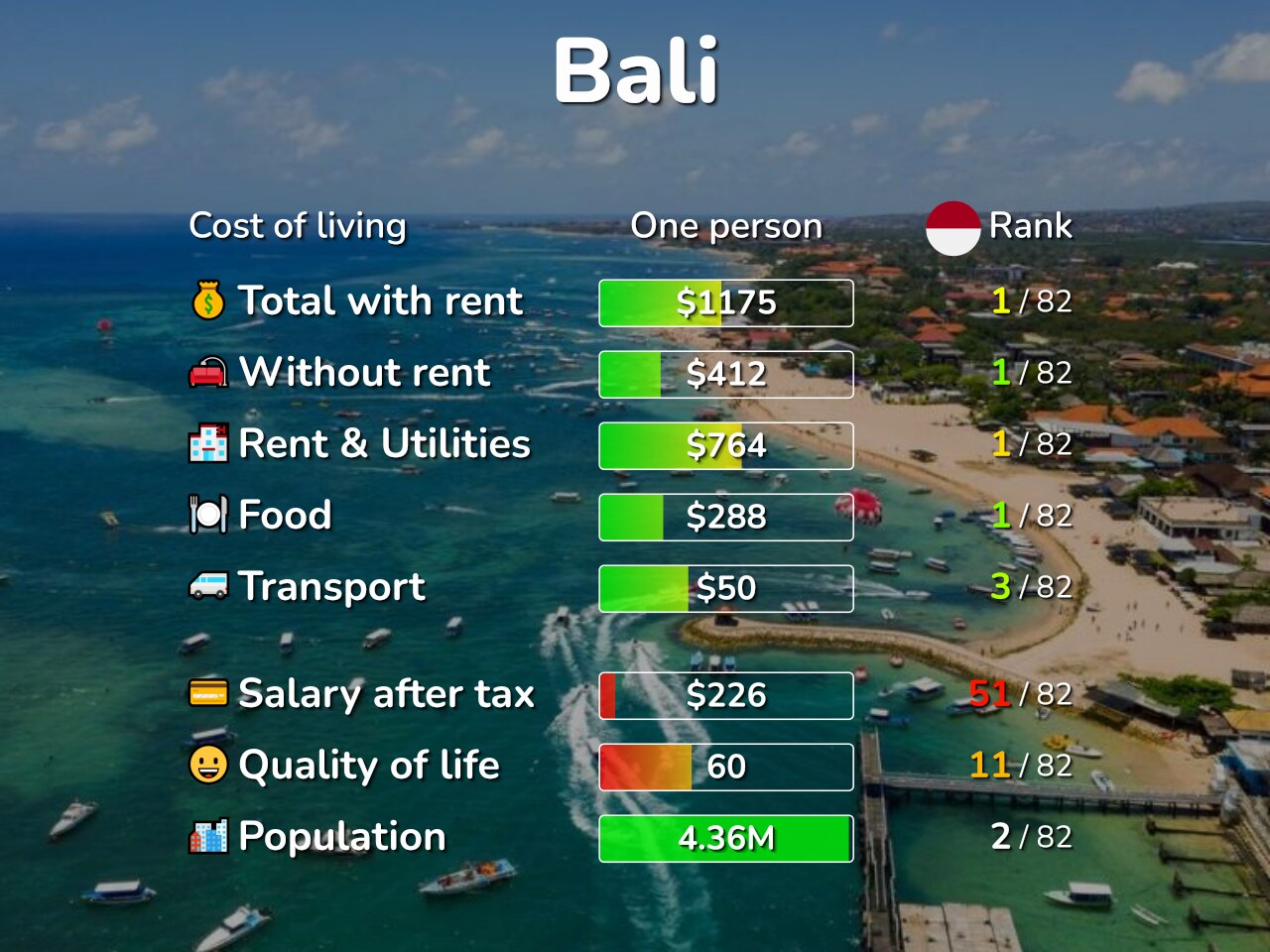
Monthly Budget Breakdown
Housing: This is your largest expense. A simple studio apartment can cost USD 300–$500, while a modern, private villa with a pool ranges from USD 1,000 to $2,500+ per month.
Food and Dining: Local warungs offer delicious meals for USD 2–$4, whereas western-style cafes and high-end restaurants will charge USD 10–$25 per meal.
Transportation: Renting a scooter is the most popular option, costing approximately USD 60–$100 per month. Gas is highly affordable, often costing less than USD 2 per liter, though ride-hailing apps offer convenient local transportation options for those preferring not to drive.
Utilities & Internet: Expect to pay about USD 50–$100 for high-speed fiber internet, electricity, and water, depending on your air conditioning usage.
<img alt="How much does it really cost to live in Bali?" src="https://static.wixstatic.com/media/12f5c561fb403e62fe4009a3ae621958865f1e~mv2.png/v1/fill/w1000,h625,alc,q90,usm0.661.000.01/12f5c561fb403e62fe4009a3ae621958865f1e~mv2.png” style=”max-width:100%; height:auto; border-radius:8px; margin: 1rem 0;” />
Navigating Bali Visa Options in 2026
The Indonesian government has streamlined several visa categories to accommodate the growing expat community. Understanding these options, including pathways to a long-term residency permit, is a key part of planning for living in Bali, covering the cost of living and visa requirements. Choosing the right visa is critical to maintaining legal status and avoiding fines.
The Most Popular Visa Pathways
- Visa on Arrival (VoA) / e-VoA: Ideal for short-term stays or “scouting trips.” It is valid for 30 days and can be extended once for another 30 days.
- Social/Cultural Visit Visa (B211A): This is the go-to for many digital nomads. It allows for a stay of 60 days and can be extended twice, giving you up to 6 months of consecutive time in Bali.
- KITAS (Temporary Stay Permit): For those looking to live in Bali long-term, the Investor KITAS or the Working KITAS (which includes a work permit) are the standard routes. These permits allow you to reside in Indonesia for one to two years and are renewable.
- Golden Visa: Introduced for high-net-worth individuals and long-term investors, this offers a residency period of up to 5 or 10 years, providing significant convenience for permanent expatriates.
Note: Always consult with a reputable visa agent, as immigration policies can shift throughout the year. It’s also wise to seek advice on tax implications for expats and the process of banking in Indonesia to ensure full compliance.
<img alt="Cost of living in Bali" src="https://static.wixstatic.com/media/12f5c59f1ad17dd3d44672960adea3e0be5ff6~mv2.jpeg/v1/fill/w980,h621,alc,q85,usm0.661.000.01,encauto/12f5c5_9f1ad17dd3d44672960adea3e0be5ff6~mv2.jpeg” style=”max-width:100%; height:auto; border-radius:8px; margin: 1rem 0;” />
Practical Tips for Moving to Bali
Beyond the numbers and the paperwork, success in Bali depends on how well you integrate into the local culture and embrace cultural immersion.
Location Matters: Areas like Canggu and Uluwatu are hubs for digital nomads, while Ubud offers a quieter, culture-focused vibe. Research the “vibe” of each area before signing a long-term lease.
Healthcare: While there are excellent international hospitals and private medical facilities in Bali (such as BIMC), understanding the local healthcare system and having comprehensive health insurance is mandatory for any serious expat to cover potential medical evacuations or specialized treatments.
- Infrastructure: While Bali has made massive strides in internet connectivity, always check the Wi-Fi speed of your potential villa or co-working space before committing, especially if you rely on high-bandwidth video calls.
Conclusion
Living in Bali in 2026 offers a unique blend of adventure, affordability, and personal growth. By meticulously planning your budget and understanding the current visa landscape, including considerations for families regarding international schools, you can bypass the common pitfalls of expat life. This comprehensive guide on living in Bali, cost of living, and visa options aims to provide that essential preparation. Whether you are chasing the surf, building a business, or simply looking for a change of pace, Bali remains a premier destination that offers incredible value for those who approach it with respect and preparation.