
Planning your dream getaway to the Island of the Gods? Understanding the climate is the first step toward a perfect trip. While many travelers assume Bali is a year-round paradise, the Bali weather all year round actually follows a distinct rhythm dictated by the tropical monsoon cycle. Whether you are planning a surf trip, a yoga retreat, or a honeymoon, knowing what to expect in 2026 will help you pack smart and plan better.
In this guide, we break down the seasonal shifts, temperature averages, and the best times to visit to ensure your tropical escape is nothing short of perfection.
The Tropical Climate of Bali: What to Expect
Bali experiences a true tropical climate, meaning it stays warm and humid throughout the year. You won’t need a heavy coat here; instead, you can expect average high temperatures hovering around 27°C to 28°C (81°F to 82°F). While the heat is consistent, the island’s weather is primarily defined by two distinct seasons: the dry season and the rainy (monsoon) season.
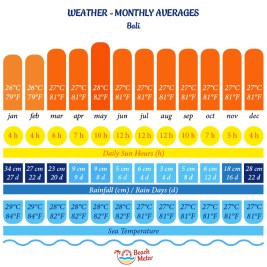
The dry season typically runs from April to October. During these months, the northwest monsoon is absent, leading to lower humidity, plenty of sunshine, and a fresh breeze in the evenings. Conversely, the rainy season occurs from November to March. While this period brings more frequent rainfall, it is important to remember that “rainy” in Bali often means short, tropical downpours followed by bright sunshine, rather than days of unending gloom.
Dry Season: The Prime Time for Adventure (April – October)
For many, the dry season represents the “best” time to visit Bali. Starting in April, the humidity drops, and the skies clear up, making it the ideal window for outdoor activities.
Sunshine Hours: April boasts some of the highest daily sunshine averages, often reaching up to 9 hours per day.
Beach Conditions: The dry season is when Bali’s beaches are at their most pristine. With less runoff from inland rivers, the water is clearer, making it perfect for snorkeling and diving.
Cooler Evenings: One of the hidden gems of the dry season is the pleasantly fresh air during the evening, especially in higher-altitude areas like Ubud or the Kintamani mountains.
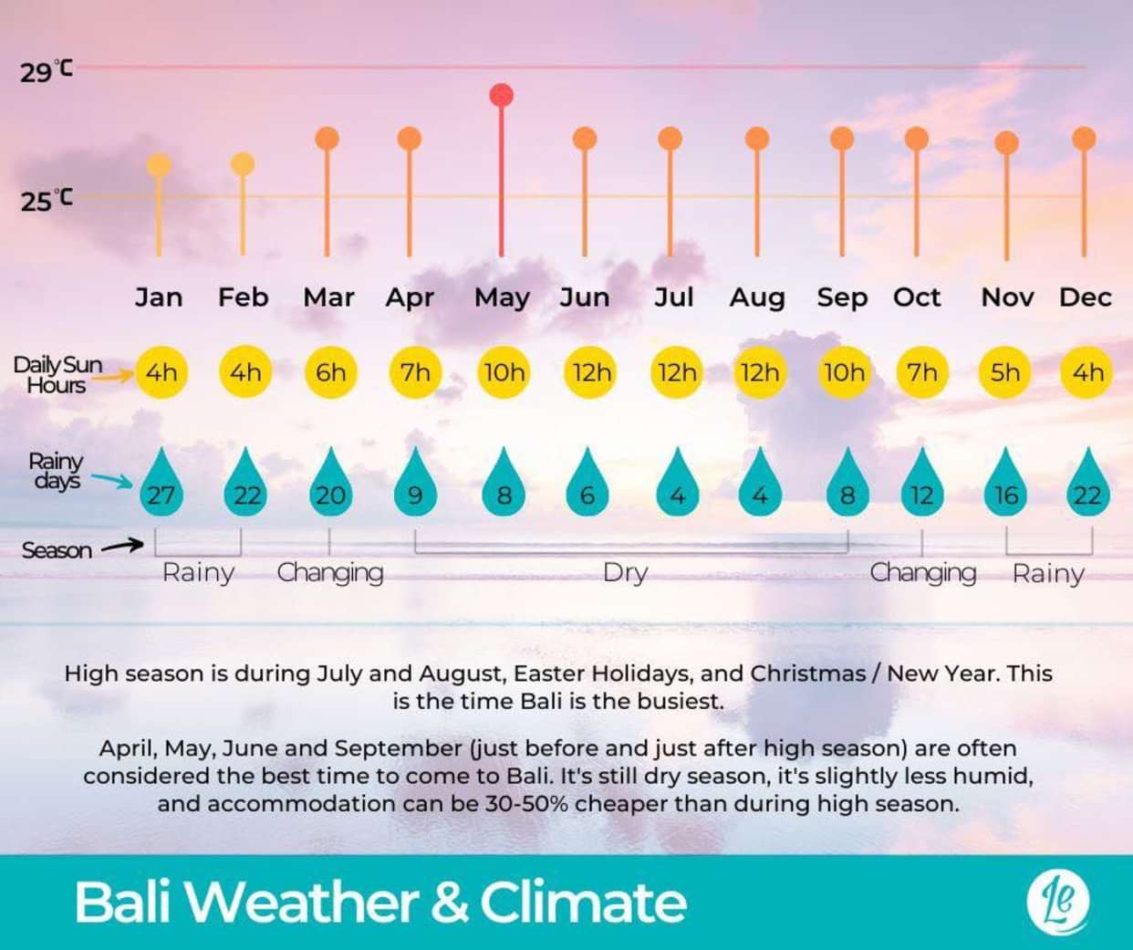
Even during the dry season, nature can be unpredictable. You might experience a brief, refreshing shower, but these are usually quick and serve to cool down the tropical heat. If you are planning a trip in 2026, targeting the months of May, June, or September offers a sweet spot of great weather and slightly fewer crowds than the peak months of July and August.
Navigating the Rainy Season (November – March)
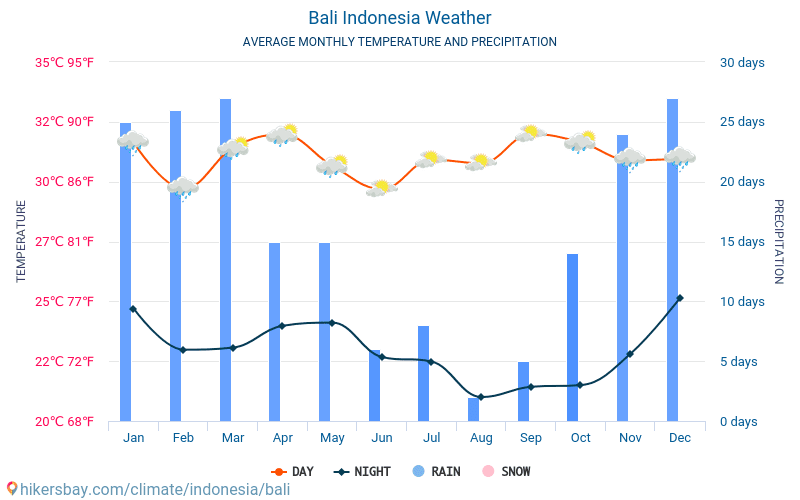
Don’t let the term “rainy season” scare you away! Visiting Bali between November and March has its own unique charm. The landscape transforms into a vibrant, lush green, and the island feels much more peaceful.
Rainfall Patterns: Most rainfall arrives in the form of heavy, intense bursts that last an hour or two, often in the late afternoon or overnight.
Temperature Stability: Even during the “coldest” month, January, temperatures rarely dip below 26°C (79°F). You will still be wearing your swimwear and linen shirts daily.
Off-Peak Benefits: Because it is the off-season, you can often find significantly discounted rates on luxury villas and hotels. It is the perfect time for those looking for a relaxing, budget-friendly retreat.
If you decide to travel during these months, simply embrace the “slow travel” mindset. Keep an umbrella or a light poncho handy, and plan your outdoor excursions for the mornings when the weather is typically at its most stable.
Essential Tips for Your 2026 Bali Trip
To make the most of your visit, keep these factors in mind:
- Elevation Matters: Bali’s weather is not uniform across the island. The central highlands (Ubud, Munduk, Bedugul) are consistently cooler and experience more rainfall than the coastal areas like Kuta, Seminyak, or Uluwatu.
- Packing Strategy: Regardless of the season, prioritize breathable, natural fabrics like cotton and linen. If you are planning to visit the mountains, do pack a light sweater or jacket for the cooler nights.
- The “Shoulder” Months: If you want a balance of good weather and fewer tourists, aim for April, May, or October. These transition months offer a fantastic blend of sunshine and affordability.
- Humidity Check: Humidity is a constant in Bali. Staying hydrated and choosing accommodation with good airflow or air conditioning will ensure you remain comfortable throughout your stay.
Conclusion: Is There a Bad Time to Visit?
Ultimately, the Bali weather all year round is designed for tropical living. While the dry season offers more consistent sunshine for beach lovers and surfers, the rainy season provides a lush, verdant backdrop for those interested in culture, yoga, and wellness.
By understanding the seasonal shifts, you can tailor your 2026 itinerary to align with your personal preferences. Whether you’re chasing the sun or seeking the tranquility of a tropical downpour in a luxury villa, Bali remains one of the most inviting destinations on earth. Pack your bags, keep an eye on the forecast, and get ready for an unforgettable island adventure.