
Bali, famously known as the “Island of the Gods,” remains one of the world’s most spiritually vibrant destinations. In 2026, the unique tapestry of Balinese Hinduism—known locally as Agama Hindu Dharma—continues to captivate travelers and scholars alike. It is not merely a religion; it is a comprehensive way of life that dictates the rhythm of the island.
Unlike the Hinduism practiced in India, Balinese Hinduism is a fascinating blend of Indian Vedic traditions, Buddhism, and indigenous animist beliefs. This article explores the core philosophies, daily rituals, and grand ceremonies that define this unique spiritual path in the modern era.
The Core Philosophy: Tri Hita Karana
At the heart of Balinese life lies the concept of Tri Hita Karana, which translates to the “three causes of prosperity.” This philosophy emphasizes a triple harmony that every Balinese person strives to maintain.
Parhyangan: Harmony between humans and the Divine (God).
Pawongan: Harmony between fellow human beings.
Palemahan: Harmony between humans and the natural environment.
In 2026, this ancient wisdom is more relevant than ever, as Bali leads the way in eco-spirituality and sustainable tourism, proving that ancient rituals can coexist with modern environmental preservation.
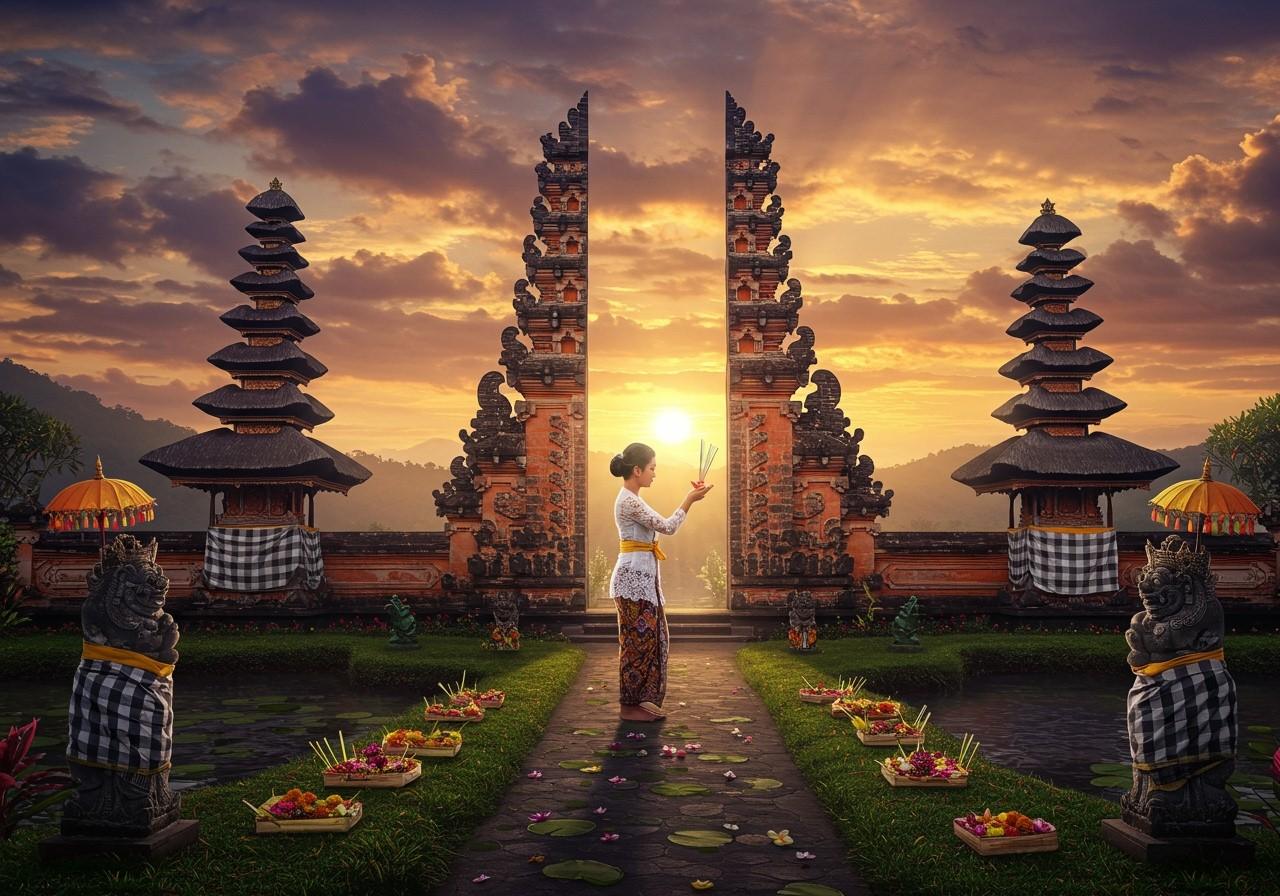
The Five Pillars of Faith (Panca Sradha)
Balinese Hindus follow five fundamental beliefs, collectively known as Panca Sradha. These pillars form the intellectual and spiritual backbone of their daily actions:
- Brahman: Belief in one Supreme God, Sang Hyang Widhi Wasa. While there are many manifestations (like Brahma, Vishnu, and Shiva), they are all seen as aspects of the one Divine Source.
- Atman: Belief in the eternal soul that inhabits every living being.
- Karma Phala: The law of cause and effect. Every action has a consequence, either in this life or the next.
- Samsara (Punarbhava): The cycle of rebirth and reincarnation.
- Moksha: The ultimate goal of spiritual liberation, where the soul unites with the Divine and is freed from the cycle of rebirth.
Daily Rituals: The Art of Canang Sari
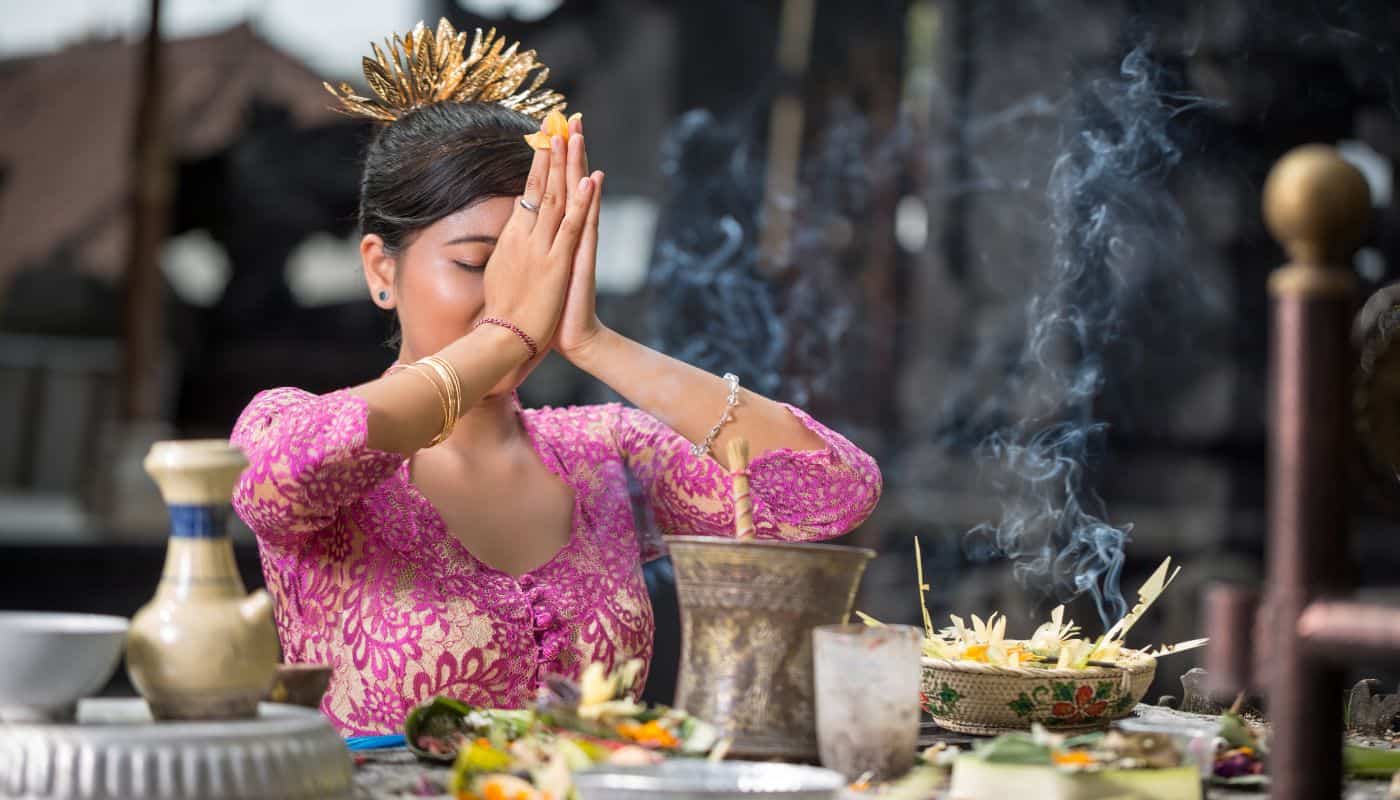
If you walk the streets of Ubud or Seminyak in 2026, you will still see the colorful, hand-woven palm leaf baskets known as Canang Sari. These daily offerings are the most visible manifestation of Balinese devotion.
Each element in the basket is symbolic. The white lime, red betel nut, and green gambier represent the Tri Murti (Shiva, Brahma, and Vishnu). Flowers are placed in specific directions to honor different deities. These offerings are a daily “thank you” to the Creator for the balance of the universe.
Grand Rituals and Festivals
The Balinese calendar is packed with ceremonies, but a few stand out for their scale and spiritual significance.
Nyepi: The Day of Silence
Nyepi is perhaps the most profound ritual in Bali. It marks the Balinese New Year according to the Saka calendar. For 24 hours, the entire island shuts down. No lights are allowed, no work is done, and even the international airport closes.
The purpose is to trick evil spirits into thinking the island is deserted while the people engage in self-reflection and meditation. In 2026, Nyepi remains a powerful global symbol of “quiet activism” against climate change and noise pollution.
Galungan and Kuningan
Galungan celebrates the victory of Dharma (good) over Adharma (evil). It is a time when ancestral spirits are believed to visit the Earth. Ten days later, Kuningan marks the day these spirits return to the celestial realm. The streets are lined with Penjor—tall, decorated bamboo poles that symbolize the sacred Mount Agung.
The Ogoh-Ogoh Parade
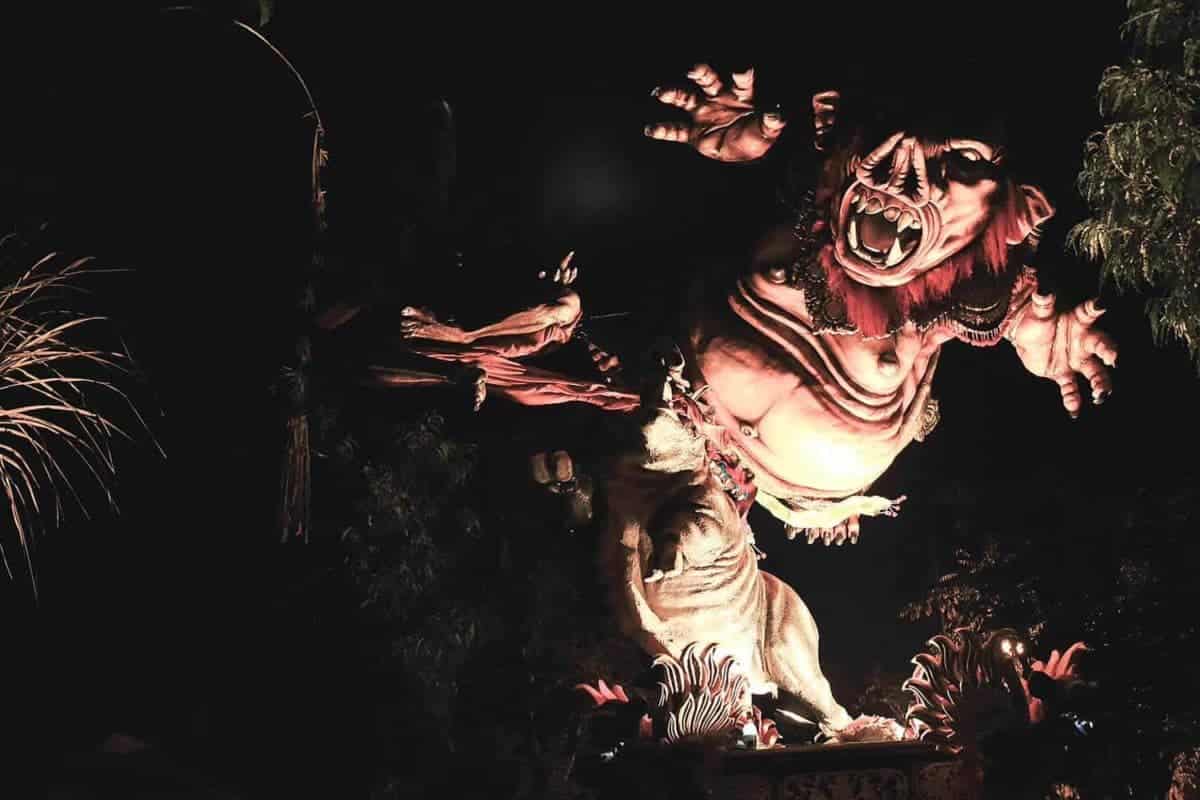
On the eve of Nyepi, the island erupts in a spectacle of giant, demonic statues known as Ogoh-Ogoh. These represent negative energy and elements. They are paraded through the streets with fire and music before being symbolically burnt to purify the environment.
Ancestor Worship and Animism
One of the most distinct features of Balinese Hinduism is the deep-rooted belief in ancestral spirits. Most Balinese homes have a family shrine (Sanggah) where they communicate with their ancestors.
The Balinese also believe that spirits reside in all things—trees, rocks, and water. This animistic influence is why you will often see large trees wrapped in checkered “Saput Poleng” cloth. This cloth symbolizes the balance of opposites: black and white, joy and sorrow, good and evil.
Temples: The Portals to the Divine
Bali is home to over 20,000 temples (Pura). Each village typically has three main temples (Pura Tiga Kahyangan):
Pura Puseh: Dedicated to the origin (Brahma).
Pura Desa: Dedicated to the community (Vishnu).
Pura Dalem: Dedicated to death and transformation (Shiva).
In 2026, visiting these temples requires strict adherence to traditional etiquette. Visitors must wear a sarong and sash, and maintain a respectful demeanor during active ceremonies.
Balinese Hinduism in the Digital Age of 2026
As we navigate 2026, Balinese Hinduism has adapted to the digital era without losing its soul. High-tech temple management and digital streaming of major ceremonies allow the Balinese diaspora to stay connected to their roots.
However, the core remains untouched: the smell of incense, the sound of the Gamelan, and the unwavering commitment to maintaining the balance of the universe. The youth of Bali are increasingly using social media to document and preserve their rituals, ensuring that Agama Hindu Dharma thrives for generations to come.
Conclusion
Balinese Hinduism is a living, breathing philosophy that offers profound lessons in harmony, gratitude, and resilience. Whether it is through the silent contemplation of Nyepi or the daily beauty of a Canang Sari, the rituals of Bali serve as a reminder of our connection to the Divine and the Earth. As the world becomes more fast-paced, the spiritual anchors of Bali provide a sanctuary of peace and meaning.