
Planning a trip across the vast Indonesian archipelago in 2026? If so, you have likely realized that Indonesia is much larger than it looks on a standard map. Spanning over 5,000 kilometers from west to east, this massive country is geographically diverse and chronologically divided. Because of its sheer size, Indonesia utilizes three distinct time zones to ensure that local business and daily life align with the sunrise and sunset.
Whether you are a digital nomad, a business traveler, or a vacationer hopping from the temples of Java to the beaches of Raja Ampat, understanding these time differences is crucial. In this guide, we will break down indonesia time zones explained simply, helping you navigate your schedule with confidence.
Why Does Indonesia Have Three Time Zones?
To understand why Indonesia uses three time zones, we have to look at the Earth’s rotation and the country’s unique geography. Indonesia stretches from approximately 94°45’E to 141°05’E longitude. Because the Earth rotates 360 degrees every 24 hours, each time zone roughly covers 15 degrees of longitude.
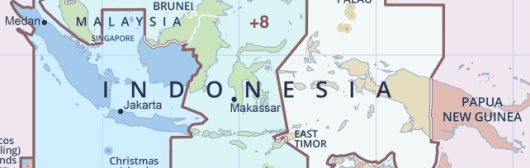
Because Indonesia spans nearly 46 degrees of longitude, it is physically impossible to have a single, unified time for the entire nation without disrupting the natural light cycle. This division is essential for understanding indonesia time zones explained simply. By dividing the country into three zones—WIB, WITA, and WIT—the government ensures that in every part of the country, noon happens when the sun is roughly at its highest point in the sky.
The Three Zones: WIB, WITA, and WIT
Indonesia is not complicated once you know the abbreviations. Let’s look at indonesia time zones explained simply through their abbreviations. Each zone is offset from Coordinated Universal Time (UTC), and there is a one-hour difference between each consecutive zone.
1. Western Indonesia Time (WIB)
Time Offset: UTC+07:00
Region Covered: Sumatra, Java, West Kalimantan, and Central Kalimantan.
Key Cities: Jakarta, Surabaya, Bandung, and Medan.
Understanding WIB is crucial when learning about indonesia time zones explained simply. WIB (Waktu Indonesia Barat) is the most populated zone, as it includes the capital city of Jakarta and the island of Java. If you are flying into Indonesia from international destinations in Southeast Asia, you will likely land in the WIB zone first.
2. Central Indonesia Time (WITA)
Time Offset: UTC+08:00
Region Covered: Bali, Sulawesi, East and South Kalimantan, West Nusa Tenggara, and East Nusa Tenggara.
Key Cities: Denpasar (Bali), Makassar, and Balikpapan.
This zone is another key component of indonesia time zones explained simply. WITA (Waktu Indonesia Tengah) is the primary tourist hub of the country. Because Bali operates on WITA, visitors often find themselves needing to adjust their watches by one hour if they fly from Jakarta (WIB) to Denpasar.
3. Eastern Indonesia Time (WIT)
Time Offset: UTC+09:00
Region Covered: Maluku Islands and Papua.
Key Cities: Ambon and Jayapura.
Completing our look at indonesia time zones explained simply, WIT (Waktu Indonesia Timur) is the furthest ahead. Travelers visiting the pristine diving spots of Raja Ampat or the remote regions of Papua will be two hours ahead of those in Jakarta.
Important Facts for Travelers in 2026
When planning your itinerary for 2026, there are a few “golden rules” to keep in mind regarding time management in Indonesia. These facts further enhance your understanding of indonesia time zones explained simply.
No Daylight Saving Time: Unlike many countries in the West, Indonesia does not observe Daylight Saving Time (DST). The clocks remain the same all year round, regardless of the season. This consistent approach is part of what makes indonesia time zones explained simply. This makes planning travel between zones much more predictable.
The “Two-Hour Gap”: The maximum time difference within Indonesia is two hours (between the westernmost point in Sumatra and the easternmost point in Papua). Always double-check your flight arrival times, as airlines will specify the local time of the destination airport.
Communication Planning: If you are working remotely, remember that a meeting scheduled at 9:00 AM in Jakarta (WIB) will be 11:00 AM in Jayapura (WIT). Always verify which time zone your colleagues or clients are in to avoid confusion.
How to Manage Time Differences Effectively
Traveling across these zones can sometimes lead to “traveler’s lag” or scheduling mishaps. These tips will help you manage indonesia time zones explained simply. To stay organized:
- Use a World Clock App: Keep your smartphone updated with a world clock widget that shows Jakarta, Bali, and Jayapura simultaneously.
- Verify Flight Itineraries: Airlines always list the local time at the arrival airport. Don’t be alarmed if your flight duration seems “too short” or “too long” on paper; it is almost always due to the time zone shift.
- Check Meeting Invites: If you are using digital calendars, ensure your software is set to the correct local time zone for the location you are visiting.
Conclusion
Understanding Indonesia’s time zones is the first step toward a seamless travel experience. This guide has aimed to provide indonesia time zones explained simply. By remembering the simple progression of WIB (UTC+7), WITA (UTC+8), and WIT (UTC+9), you can navigate the archipelago with ease. Whether you are conducting business in the bustling streets of Jakarta or chasing the sunrise in the remote islands of the east, you now have the tools to keep your schedule perfectly synced.
Indonesia’s lack of daylight saving time provides a consistent rhythm that benefits both locals and visitors. We hope this explanation of indonesia time zones explained simply has been helpful. As you explore this vast and beautiful nation in 2026, keep these time zones in mind, and you will never miss a sunrise, a flight, or an important meeting.