
Are you planning a tropical getaway to the Island of the Gods in 2026? Understanding the Bali temperature range day and night is the single most important factor in ensuring your holiday is comfortable, safe, and packed with the right gear. Whether you are trekking up Mount Batur for sunrise or lounging on the sands of Seminyak, the mercury behaves differently depending on the hour and your location.
Bali is famous for its “endless summer,” but there is more to its climate than just sun and sand. In 2026, with shifting global weather patterns, staying updated on local microclimates is essential for every traveler. This guide breaks down exactly what to expect from the thermometer so you can maximize every moment of your Balinese adventure.
Understanding Bali’s Tropical Climate in 2026
Bali is situated approximately 8 degrees south of the equator, which grants it a tropical monsoon climate. This means that while temperatures remain relatively stable throughout the year, the humidity levels and rainfall vary significantly.
Generally, the island experiences two primary seasons:
- The Dry Season (April to October): Characterized by lower humidity and cooler nights.
- The Wet Season (November to March): Known for high humidity, tropical downpours, and warmer evenings.
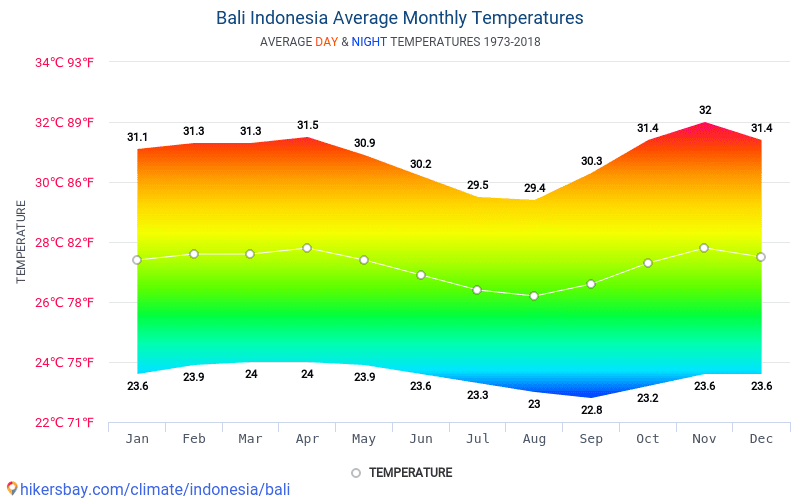
Despite these seasons, the average daytime temperature hovers around 30°C (86°F), while the nighttime dip averages 24°C (75°F). However, these are just averages—the reality on the ground can be much more nuanced.
The Daytime Heat: What to Expect Under the Sun
During the day, Bali is a powerhouse of heat and light. In coastal areas like Kuta, Canggu, and Uluwatu, the temperature typically peaks between 12:00 PM and 3:00 PM.
Coastal Peaks: In areas like Parit or Denpasar, daytime highs can reach 33°C (91°F) or higher.
The “RealFeel” Factor: Because of the high humidity (often exceeding 85% in the wet season), a 31°C day can easily feel like 38°C. This is known as the heat index, and it’s a crucial consideration for outdoor activities.
Northern Variations: In northern regions like Kubutambahan, the average high is often slightly lower, around 29°C (84°F), thanks to different coastal breezes.
In 2026, travelers are encouraged to stay hydrated and seek shade during the peak UV hours. The tropical sun is incredibly intense, and heat exhaustion is a common pitfall for those who underestimate the Bali temperature range day and night.
The Nighttime Cool: Why You Might Need a Light Jacket
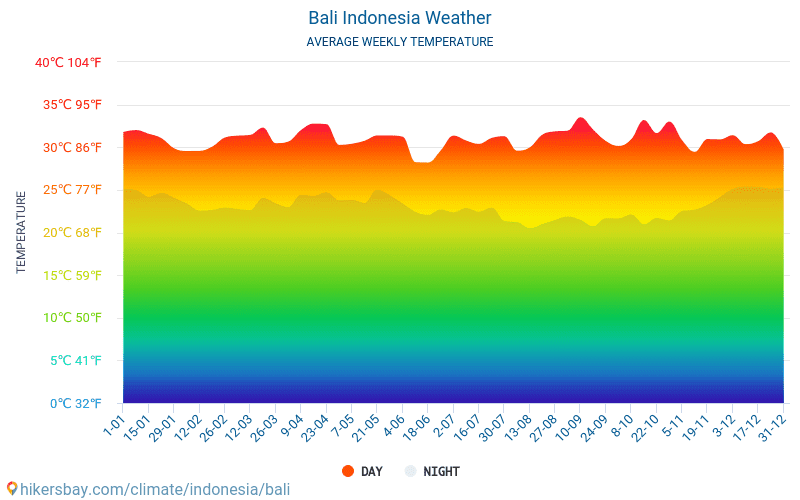
One of the biggest surprises for first-time visitors is how much the temperature can drop once the sun sets, especially during the dry season. While the coast remains warm, the “winter” months of June, July, and August bring a refreshing change.
Dry Season Nights: During these months, nighttime temperatures in coastal areas can drop to 20-23°C (68-73°F). While this sounds warm to those from temperate climates, the contrast with the daytime heat makes it feel significantly cooler.
Wet Season Nights: In contrast, during the rainy season (December to February), the nights remain muggy and warm, rarely dropping below 25°C (77°F). The cloud cover acts as a blanket, trapping the day’s heat.
Regional Microclimates: Highlands vs. Lowlands
The most dramatic variations in the Bali temperature range day and night are found when moving from the coast to the mountains. Bali is a volcanic island with significant elevation changes, creating distinct microclimates.
1. The Southern Coast (Seminyak, Kuta, Bukit)
This is the warmest part of the island. Expect consistent heat and high humidity. The sea breeze offers some relief, but the concrete and asphalt of developed areas can retain heat long into the night.
2. Central Bali (Ubud)
Ubud is slightly higher in elevation. While days are still hot, the nighttime temperature is noticeably lower than on the coast. It is not uncommon for Ubud to be 2-3 degrees cooler than Denpasar at any given time.
3. The Northern Highlands (Bedugul, Munduk, Kintamani)
This is where the rules change completely. In areas like Bedugul (home to the famous Ulun Danu Beratan Temple), daytime temperatures rarely exceed 25°C (77°F). At night, it can drop to a brisk 15°C (59°F). If you are planning a sunrise trek to Mount Batur, be prepared for temperatures near 10°C (50°F) at the summit—you will definitely need a fleece!
Month-by-Month Temperature Snapshot for 2026
To help you plan your 2026 itinerary, here is a quick breakdown of what the thermometer will likely show:
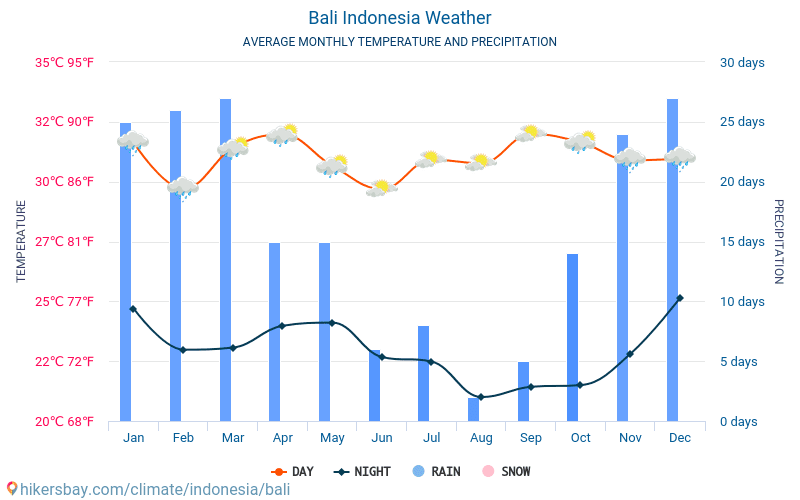
January – March: High humidity, frequent rain, day temps around 31°C, night temps around 26°C.
April – May: Transition months. The air begins to clear, humidity drops, and day temps stay at a steady 30°C.
June – August: The “peak” of the dry season. This period offers the most pleasant Bali temperature range day and night. Expect 29°C days and surprisingly cool 21°C nights.
September – October: The hottest months. As the rains approach, the heat builds up. Expect highs of 32-34°C.
November – December: The return of the monsoon. Warm, wet, and humid.
Packing Tips for the Bali Temperature Range
Given the variation between the scorching midday sun and the cool mountain nights, your packing list for 2026 should be versatile:
- Breathable Fabrics: Stick to linen, bamboo, or moisture-wicking synthetic fabrics. Avoid heavy denim.
- Light Layers: A light cardigan or pashmina is essential for air-conditioned flights, malls, and those cooler dry-season evenings.
- Mountain Gear: If heading to Munduk or Kintamani, pack a lightweight puffer jacket or a thick hoodie.
- Sun Protection: A high-SPF sunscreen is non-negotiable. The UV index in Bali frequently hits “Extreme” levels by 10:00 AM.
- Rain Gear: A lightweight, packable poncho is better than an umbrella for navigating Bali’s narrow streets during a tropical squall.
Conclusion: Balancing the Heat and the Chill
Understanding the Bali temperature range day and night is the key to a successful trip in 2026. While the island is synonymous with heat, the reality is a beautiful spectrum of temperatures that shift with the seasons and the terrain. By planning for the midday humidity and preparing for the surprising mountain chill, you can experience all the magic Bali has to offer without being sidelined by the weather.
Whether you are chasing the sun on a surfboard or seeking the mist in the central highlands, Bali’s climate is part of its enchanting character. Respect the sun, embrace the rain, and enjoy the cool evening breeze of the tropics.