
Traveling to the Island of the Gods is a bucket-list experience, but the true magic happens when you connect with the locals. As we step into 2026, Bali remains a vibrant melting pot of tradition and modernity. Understanding how to communicate in Bali as a tourist isn’t just about learning words; it’s about mastering the cultural nuances and etiquette and demonstrating genuine cultural sensitivity that make your interactions meaningful.
Whether you are navigating a local market in Ubud or requesting a ride in Canggu, knowing how to break the language barrier and effectively navigate dealing with language barriers will transform your trip from a standard vacation into an authentic cultural immersion, even when asking for directions.
The Importance of Tone and Manner in Balinese Culture
In Bali, how you say something is often more important than what you say. The Balinese culture values harmony (Tri Hita Karana), which heavily influences daily communication and non-verbal communication. A soft, gentle tone is considered respectful, while raising your voice or displaying overt aggression is seen as a significant loss of face.
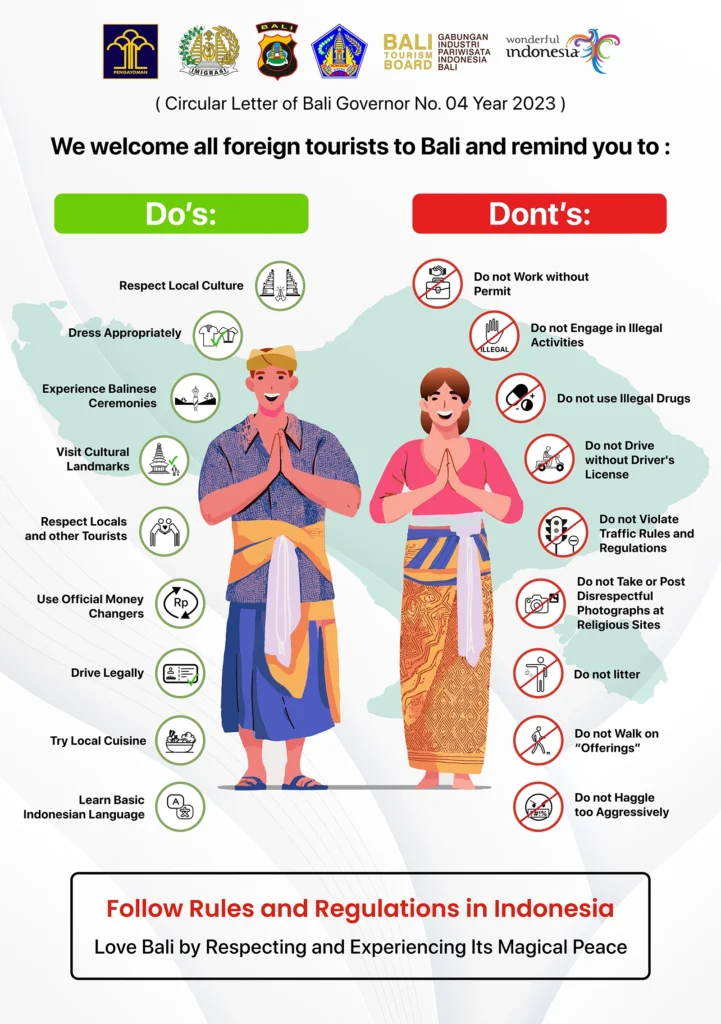
When interacting with locals, always lead with a warm smile. A smile in Bali acts as a social lubricant, smoothing over misunderstandings or language gaps, fostering truly respectful interactions with locals. Remember that physical touch, especially on the head, is considered taboo, so keep your gestures respectful and maintain a polite distance during conversations.
Essential Phrases to Bridge the Gap
While English is widely spoken in tourist hubs, making an effort to speak Bahasa Indonesia or a bit of the distinct Balinese language will earn you instant respect. By 2026, locals appreciate travelers who go beyond the basics.
Here are the essential phrases you should memorize:
“Halo / Selamat Pagi/Siang/Sore/Malam”: Hello / Good morning/afternoon/evening.
“Terima kasih”: Thank you (The most important phrase you will use).
“Sama-sama”: You’re welcome.
“Berapa harganya?”: How much does it cost?
“Maaf”: Sorry or excuse me.
“Bisa bahasa Inggris?”: Do you speak English?
Using these phrases shows that you respect the local heritage and appreciate local traditions and customs. Even if your pronunciation isn’t perfect, the effort is viewed as a sign of humility and genuine interest in their culture.

Navigating Modern Interactions in 2026
Communication in 2026 has evolved with the integration of digital tools, including handy digital translation apps. Most transactions—from paying the Bali Tourist Tax to ordering Gojek—are handled via smartphones. However, digital efficiency should never replace the human touch.
If you are negotiating prices at a traditional market, avoid being overly aggressive. Haggling should be treated as a friendly conversation rather than a battle. If you reach a price that works for both parties, conclude the interaction with a polite “Terima kasih.”
5 Pro Tips for Effective Communication in Bali
To ensure you have a seamless experience, consider this a mini tourist etiquette guide and keep these professional tips in mind:
- Avoid Using Your Left Hand: In Balinese tradition, the left hand is considered unclean. Always use your right hand to give or receive items, especially money or food.
- Learn the “Head Tilt”: A gentle nod or slight tilt of the head often accompanies a “yes” or acknowledgment. Observe how locals use body language to convey agreement.
- Be Patient with Timing: “Jam Karet” (rubber time) is a real concept in Indonesia. Meetings or transport might not always run with precision. Staying calm and patient is a hallmark of a respectful tourist.
- Use Formal Address: If you are speaking to an elder or someone in a position of authority, adding “Pak” (for men) or “Ibu” (for women) before their name or title is a sign of high respect.
- Listen More Than You Speak: The Balinese are excellent storytellers. By listening actively, you will learn far more about the island’s history and spiritual customs than you ever could from a guidebook.
Respecting Local Customs and Religious Etiquette
Bali is deeply spiritual, and many daily interactions revolve around the rich Balinese Hindu culture and its religious practices. If you find yourself near a ceremony, ask permission before taking photos or walking through the area. A simple “Boleh saya foto?” (May I take a photo?) goes a long way in showing that you value their privacy and sacred rituals.
When visiting temples, you will be required to wear a sarong. Understanding the etiquette behind temple dress codes is a form of non-verbal communication that signals your respect for the local Hindu faith.
Conclusion: Empathy is the Universal Language
Mastering how to communicate in Bali as a tourist in 2026 is ultimately about empathy. While language apps and translation tools are incredibly helpful, they cannot replace the warmth of a genuine interaction.
By observing local customs, using a polite tone, and approaching every conversation with an open heart, you will find that the Balinese people are some of the most welcoming hosts in the world. Remember that every “Terima kasih” you say is a building block for a deeper, more enriching travel experience.