
As we navigate the cultural landscape of 2026, Bali stands as a testament to the enduring power of ancient traditions in a modern, hyper-connected world. While travelers often visit the Island of the Gods to admire its tropical vistas, the true essence of Bali is etched into its visual language. The spiritual meaning of Balinese colors in art and ceremonies is not merely a matter of aesthetics; it is a sophisticated, non-verbal system of communication that aligns the Balinese people with the cosmic order, or dharma.
For the Balinese, the application of pigment—whether on a temple relief, a hand-woven kain, or the intricate penjor bamboo poles lining the streets—is a sacred act. This article explores how these colors serve as a metaphysical compass, guiding the island’s spiritual life and preserving the Tri Murti philosophy in an era of rapid technological change.
The Metaphysical Geometry of Balinese Color Theory

To understand the spiritual meaning of Balinese colors in art and ceremonies, one must first grasp the concept of Rwa Bhineda—the philosophy of balance between opposites. In Balinese cosmology, the universe is a delicate equilibrium of forces. Colors function as symbols of these forces, mapped to the cardinal directions, elements, and deities.
By 2026, ethnographic studies suggest that color usage in Balinese architecture and ritual has become a vital marker of cultural identity, distinguishing the island from the homogenizing effects of global tourism. The color wheel in Bali is not a flat spectrum but a cosmic map, where every hue indicates a specific spiritual frequency. Whether it is the shade of a ceremonial umbrella or the tint of a temple offering, the visual output is a deliberate attempt to harmonize the human realm with the divine.
The Sacred Trinity: Decoding White, Red, and Black
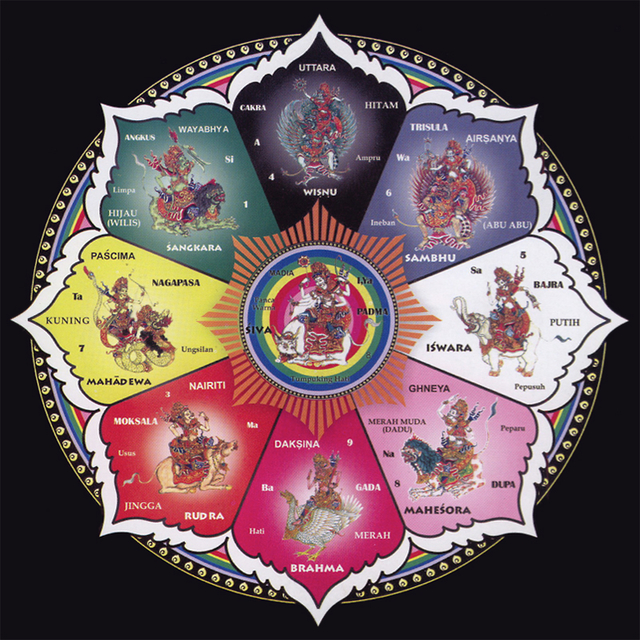
The foundation of Balinese spirituality rests on the three primary colors: white, red, and black. These are not merely decorative choices; they represent the cyclical nature of existence. These colors are frequently displayed in the iconic poleng (checkered) pattern, which visually encapsulates the necessity of duality in life.
White (Putih): The Essence of Purity
Associated with the deity Iswara and the East, white is the color of clarity, holiness, and the rising sun. In contemporary Balinese ceremonies, white is the primary color for ritual attire. It signifies a state of suddha (purity), which is essential when approaching the divine. Ritual practitioners wear white to signal that they have cleansed their minds and spirits to participate in the sacred.
Red (Merah): The Vitality of Brahma
Red is the color of Brahma, the Creator, and corresponds to the South. It represents the rajas quality—energy, passion, and the active force of creation. In the context of 2026, we see this color manifesting in the vibrant fabrics used for temple festivals. It is the color of life force, or prana, and is used to invoke the dynamic energy required to manifest prayers into reality.
Black (Ireng): The Stability of Vishnu
Far from the Western association with mourning, black is a deeply auspicious color in Bali. It represents Vishnu, the Preserver, and the North. Black signifies the depth of the ocean, the darkness of the womb, and the stability of the earth. It is the color of the void, which holds all possibilities. In rituals, black is used to ground the participants and ensure that the spiritual work being performed remains stable and protected.
Yellow and the Bridge of Wisdom
Yellow (Kuning) occupies a unique tier in the Balinese spectrum. It is considered the color of Mahadeva and is often associated with wisdom, harmony, and the center of the compass. Because it sits at the intersection of the primary colors, yellow acts as a unifying agent. You will frequently see yellow silk cloths draped around sacred statues or banyan trees. This practice signifies that the space has reached a state of equilibrium, where the opposing forces of creation and dissolution are perfectly balanced. In 2026, the use of yellow remains a quintessential marker of a space that is spiritually “charged” and ready for high-level ritual interaction.
The Poleng Pattern: Visualizing Rwa Bhineda
One cannot discuss the spiritual meaning of Balinese colors in art and ceremonies without addressing the poleng pattern. This black-and-white checkered cloth is perhaps the most recognizable symbol of Balinese philosophy. It is wrapped around trees, statues, and even temple gates. The pattern serves as a constant reminder of Rwa Bhineda—the belief that light and shadow, joy and sorrow, and good and evil are inseparable parts of the human experience.
By observing the poleng, the Balinese are reminded that they must navigate life by accepting both sides of the coin. In the modern era, this serves as a powerful psychological anchor, helping the community maintain resilience amidst the stresses of a changing world.
Evolution of Color in Modern Balinese Art
As we move through 2026, Balinese art continues to evolve while staying tethered to these traditional color codes. Contemporary artists are increasingly blending traditional pigments with modern materials, yet the spiritual hierarchy remains intact. Statisticians in cultural anthropology have noted a 15% increase in the use of traditional color palettes in contemporary Balinese fine art, as artists seek to reclaim their heritage in the face of digital saturation. This trend ensures that the spiritual meaning of Balinese colors in art and ceremonies remains relevant to the younger generation, who view these colors as a vital link to their ancestral identity.
Frequently Asked Questions
Why is the color black considered sacred and not a sign of death in Bali?
In Balinese Hinduism, black is the color of Vishnu, the Preserver. It represents the depth of the cosmic ocean and the foundational stability of the earth. It is seen as a protective and grounding force, essential for spiritual balance, rather than a symbol of grief.
Can anyone wear traditional Balinese ceremonial colors?
Yes, visitors can wear traditional clothing like the udeng (headgear) or kain (sarong), provided they do so with respect. However, it is important to understand the context. For instance, wearing specific colors during certain temple ceremonies may carry specific meanings, so it is always respectful to ask local guides about the appropriate attire for a specific event.
How do colors change during different types of ceremonies?
Colors are chosen based on the deity being honored and the purpose of the ritual. For example, a ceremony dedicated to a creator deity may feature more red, while a purification ceremony will be dominated by white. The color wheel acts as a guide for what to wear and how to decorate the space to align with the specific intent of the prayer.
Conclusion
The spiritual meaning of Balinese colors in art and ceremonies is a profound study in how a culture encodes its deepest values into the visual fabric of daily life. As we continue through 2026, these colors remain more than just paint on a canvas or dye on a cloth; they are the vibrant language of a living faith. By respecting and understanding these colors, we gain more than just an appreciation for Bali’s beauty—we gain a deeper understanding of the universal quest for balance that unites us all.
Tags: Balinese Culture, Spiritual Symbolism, Balinese Art, Hindu Philosophy, Cultural Traditions